
Hazmat Documentation Control: Why Shipping Papers, Placard References, and Training Records Must Function as One Compliance System
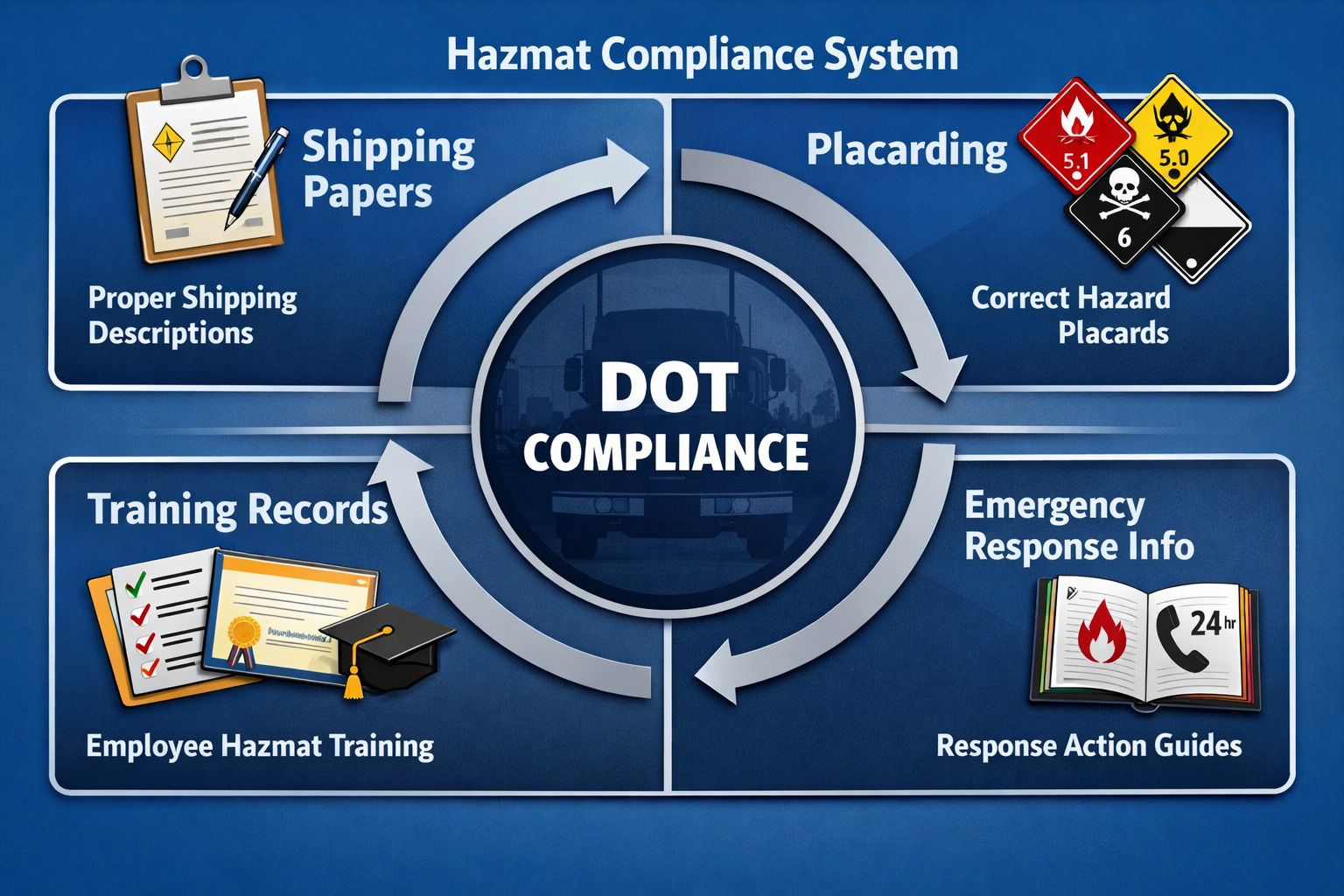
Hazardous materials transportation failures rarely begin with catastrophic events. In most operations, they originate from fragmented documentation systems. A shipping paper may technically contain the required information, yet the emergency response reference might not be immediately accessible. Placard decisions may be understood by one dispatcher but undocumented in a way that survives operational turnover. Hazmat training may have been completed, yet the records may exist across scattered digital folders, spreadsheets, and paper files.
When roadside inspections, internal audits, or operational incidents occur, these fragmented documentation systems expose deeper structural weaknesses. What initially appears to be a minor administrative oversight can quickly become a compliance exposure.
Under the Hazardous Materials Regulations (HMR), documentation obligations are not isolated tasks. Shipping papers, placarding requirements, emergency response information, and hazmat employee training operate together as a single hazard communication framework. The regulatory structure governing these obligations is defined in 49 CFR Part 172 of the Hazardous Materials Regulations, which outlines documentation, labeling, placarding, and training responsibilities for hazardous materials transportation.
For small carriers, owner-operators, and safety managers, the operational conclusion is straightforward: hazmat compliance is not simply a knowledge problem. It is a documentation control problem.
When documentation procedures vary from shipment to shipment or employee to employee, personnel are forced to make regulatory decisions under operational pressure. When documentation systems are structured and standardized, those decisions become significantly more consistent and verifiable.
For operations seeking to organize their hazmat paperwork processes, the Hazmat Trucking Forms System available on Etsy provides structured templates designed to help carriers organize shipping documentation, training records, incident reports, and shipment logs in a consistent format.
It is important to note that documentation templates do not determine regulatory compliance. Compliance determinations must always rely on the Hazardous Materials Regulations and official guidance from regulatory authorities.
The Structural Failure Pattern Behind Many Hazmat Violations
In standard freight transportation, disorganized documentation typically results in operational inefficiencies. In hazardous materials transportation, however, fragmented documentation can create regulatory vulnerabilities because multiple compliance requirements operate simultaneously.
A shipment must be correctly classified and described. The hazard must be communicated through documentation and placards. Emergency response information must be available during transportation. Employees performing hazmat functions must receive appropriate training.
According to guidance published by the Pipeline and Hazardous Materials Safety Administration hazmat training requirements overview, hazmat employee training programs are designed to ensure that personnel recognize hazardous materials, understand regulatory responsibilities related to their job functions, and respond appropriately during incidents.
The regulatory foundation for these obligations appears in 49 CFR §172.704 hazmat employee training requirements.
The difficulty many small operations encounter is not a lack of awareness of these regulations. Instead, it is the absence of a consistent documentation structure capable of maintaining stability across shipments, employees, and operational changes.
When shipping paper preparation lacks consistency, placard verification procedures often become inconsistent as well. When placard references rely on memory rather than standardized documentation, emergency response procedures may also become fragmented. When record retention practices are informal, documentation may exist but become difficult to retrieve during inspections or audits.
This pattern is visible across many DOT compliance areas. Documentation weaknesses frequently appear during safety audits and roadside inspections because regulators evaluate both operational practices and recordkeeping systems.
For a broader explanation of how recordkeeping affects DOT compliance programs, see our guide on DOT Recordkeeping and Document Retention. Likewise, the article DOT Compliance Documents: The Complete List Truck Drivers Must Maintain explains how documentation systems form the backbone of regulatory compliance.
The inspection and audit dynamics described in DOT Audit Checklist: How Trucking Companies Prepare for FMCSA Compliance Reviews further illustrate how regulators evaluate documentation systems during compliance reviews.
Across all of these areas, one principle remains constant: documentation that is inconsistent or difficult to retrieve gradually loses operational reliability.
Shipping Papers Are a Core Hazard Communication Tool
A common misconception within trucking operations is that shipping papers are merely dispatch paperwork. In reality, shipping papers function as one of the primary hazard communication tools within the hazardous materials transportation system.
Under 49 CFR §172.202 shipping description requirements, hazardous materials shipping papers must include the identification number, proper shipping name, hazard class or division, and packing group where applicable.
These elements allow emergency responders, enforcement personnel, and transportation professionals to identify the hazards associated with a shipment quickly and accurately.
When shipping paper formats vary across shipments or dispatchers, the likelihood of missing information increases significantly. Standardized documentation formats cannot replace regulatory requirements, but they can reduce inconsistencies during preparation and verification.
The Hazmat Trucking Forms System therefore includes a structured hazmat shipping paper template designed to help carriers organize required shipment information in a consistent format.
Users must still verify all shipping descriptions and classifications using the Hazardous Materials Regulations and applicable regulatory guidance.
Placarding Decisions Require Reliable Reference Systems
Placarding is often treated as a simple visual task. In practice, placard decisions represent the visible outcome of upstream classification, packaging, and quantity determinations.
Placarding rules are governed by 49 CFR Part 172 Subpart F placarding requirements. Additional operational reference material is available through the PHMSA DOT Chart 17 markings, labeling, and placarding guide.
Operationally, placard decisions must remain consistent even when shipments vary or personnel change.
When placarding decisions rely exclusively on memory, errors become more likely. Reference guides cannot replace regulatory requirements, but they can assist drivers and dispatchers in quickly verifying hazard communication details during shipment preparation.
The documentation toolkit therefore includes a placard quick-reference guide and driver hazmat reference sheet intended to support operational consistency. These reference materials are informational tools and do not replace regulatory classification, packaging, or placarding determinations required under the Hazardous Materials Regulations.
Hazmat Employee Training and Documentation
Hazmat employee training is one of the most frequently misunderstood requirements in hazardous materials transportation.
The Hazardous Materials Regulations require hazmat employers to train and test hazmat employees, certify the completion of that training, and maintain documentation of the training program. The regulatory framework governing these obligations appears in 49 CFR §172.704 training requirements.
Training programs generally include several components:
• General awareness training • Function-specific training • Safety training • Security awareness training • In-depth security training where applicable
PHMSA guidance explains that new hazmat employees must receive required training within the regulatory timeframe, and until training is completed they may perform hazmat functions only under conditions permitted by the regulations, such as direct supervision where allowed.
Training records must document the employee name, the most recent training completion date, the materials used during training, the trainer identity, and certification that the employee was trained and tested as required.
Additional official guidance on developing hazmat training programs can be found in the PHMSA Guide to Developing a Hazardous Materials Training Program.
The documentation toolkit therefore includes training record templates and a training expiration tracker designed to help carriers maintain consistent training documentation across employees and training cycles.
Emergency Response Information Must Be Accessible
Emergency response information is another critical component of hazmat transportation documentation.
Under 49 CFR §172.602 emergency response information requirements, emergency response information must accompany hazardous materials shipments and be immediately accessible to personnel responsible for transportation.
In operational terms, emergency response information must be usable under real-world conditions. Information that technically exists but cannot be quickly located during an incident provides limited practical value.
For this reason, incident intake reports, spill documentation forms, and emergency contact records should be integrated into the same documentation system used for shipping papers and training records.
Integrating Hazmat Documentation into a Broader Compliance System
Hazmat documentation should never exist in isolation. Shipping papers, training records, incident reports, and placard references interact with multiple operational systems including roadside inspections, safety management programs, and company recordkeeping structures.
Carriers building structured compliance programs may find additional guidance in the following resources:
• DOT Compliance Checklist 2026 • DOT Roadside Inspections Levels • Roadside Inspection Survival Guide • PHMSA Hazmat Harmonization 2026 NPRM
These topics demonstrate a consistent operational principle: compliance stability emerges when documentation systems are structured, consistent, and retrievable.
Final Compliance Perspective
Hazardous materials transportation requires more than regulatory familiarity. It requires documentation systems capable of maintaining accuracy, consistency, and accessibility across daily operations.
Shipping papers communicate hazard information. Placards communicate risk visually. Training ensures employees understand their responsibilities. Emergency response information ensures preparedness during incidents.
Together, these elements form the hazard communication system defined by the Hazardous Materials Regulations and interpreted through guidance from PHMSA and other regulatory authorities.
Operations that rely on informal documentation practices often encounter avoidable inconsistencies. Operations that implement structured documentation frameworks reduce those risks significantly.
For carriers seeking to organize their hazmat documentation processes, the Hazmat Trucking Forms System provides structured templates and reference materials designed to help organize shipping documentation, training records, incident reporting, and shipment logs.
These materials are intended to support documentation organization and operational consistency. They do not replace regulatory requirements, official guidance, or professional compliance advice.
Regulatory references verified against official PHMSA and Electronic Code of Federal Regulations sources. This article is provided for informational purposes only and does not constitute legal advice.