DOT Audit Checklist: How Trucking Companies Prepare for FMCSA Compliance Reviews
A DOT safety audit is not a routine paperwork review. It is a structured federal compliance examination designed to verify that a motor carrier has implemented the safety management controls required under federal transportation regulations.
During an audit, investigators evaluate whether a carrier maintains operational control over driver qualification, vehicle safety, hours-of-service compliance, and documentation systems. Failure to demonstrate these controls can result in enforcement action, fines, or even revocation of operating authority.
For a foundational explanation of the regulatory framework behind these audits, start with What Is DOT Compliance.
This guide explains the practical DOT audit checklist used by carriers preparing for FMCSA safety reviews.
Understanding DOT Safety Audits
DOT safety audits are conducted by the Federal Motor Carrier Safety Administration (FMCSA) to evaluate whether a motor carrier has implemented basic safety management controls.
These reviews often occur in situations such as:
- New entrant safety monitoring
- Compliance reviews triggered by safety violations
- Targeted safety investigations
The methodology used in new entrant safety audits is explained in New Entrant Safety Audit: FMCSA Methodology.
New carriers should also understand the operational preparation strategies described in New Entrant Safety Audit Survival Guide.
DOT Audit Checklist Overview
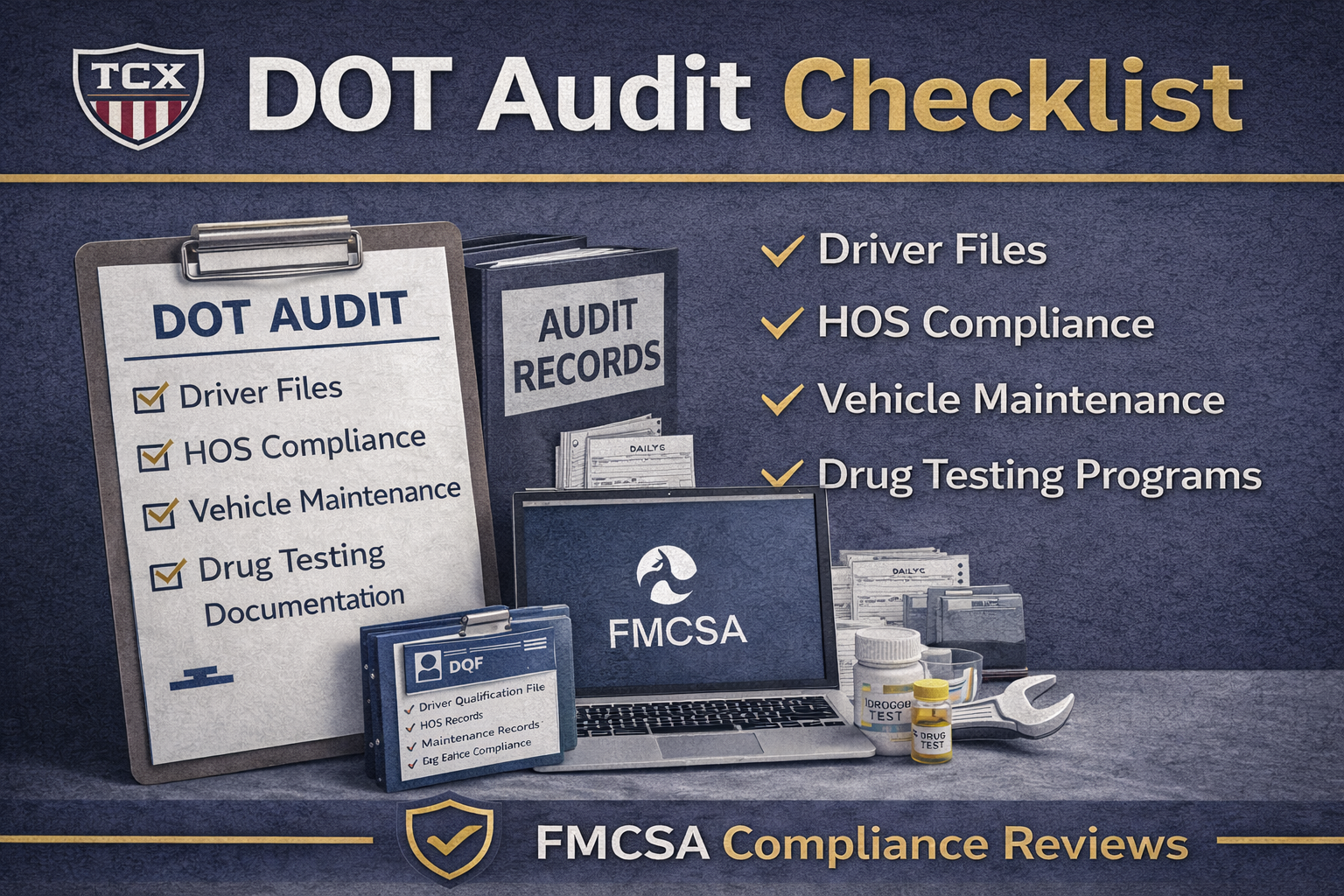
Most FMCSA compliance audits examine five primary operational areas:
- Driver qualification systems
- Hours-of-Service compliance
- vehicle inspection and maintenance systems
- drug and alcohol testing compliance
- documentation and recordkeeping systems
Each category represents a core safety management control required under federal motor carrier regulations.
Driver Qualification File Verification
Auditors typically begin by reviewing driver qualification documentation.
The Driver Qualification File demonstrates that the carrier verifies driver eligibility and maintains oversight of driver qualifications.
A detailed explanation of required documentation is available in Driver Qualification File Requirements.
Typical audit checks include:
- CDL verification
- medical certificate status
- annual motor vehicle record reviews
- employment verification documentation
- violation certification records
Auditors evaluate whether the carrier actively maintains these records rather than creating them only when an audit occurs.
Hiring compliance procedures are also examined. These procedures are described in DOT Pre-Employment Requirements.
Drug and alcohol compliance verification is connected to driver eligibility through the federal Clearinghouse system. A detailed explanation of that system can be found in FMCSA Clearinghouse Guide.
Hours-of-Service Compliance Review
Another major audit focus is driver hours-of-service compliance.
Federal regulations limit driving hours to reduce fatigue-related crash risk. The regulatory framework behind these limits is explained in Hours of Service Rules.
During audits, investigators review:
- driver duty status records
- electronic logging device data
- supporting operational documentation
- log edit histories and annotations
Modern enforcement assumes ELD-based recordkeeping. The compliance framework for these devices is explained in Electronic Logging Device Compliance.
Violations related to inaccurate duty status records can result in enforcement penalties or driver Out-of-Service conditions. These enforcement outcomes are explained in Hours-of-Service Violations (Out-of-Service).
Vehicle Maintenance Documentation
FMCSA audits also evaluate whether carriers maintain a structured vehicle maintenance system.
Federal regulations require carriers to inspect vehicles regularly, correct mechanical defects, and maintain repair documentation.
The regulatory expectations for maintenance systems are explained in DOT Vehicle Inspection and Maintenance Requirements.
Typical documentation reviewed during audits includes:
- driver inspection reports
- maintenance records
- repair documentation
- annual inspection reports
Mechanical defects that frequently trigger enforcement action include brake system failures and tire defects.
The enforcement criteria for these violations are described in:
Brake System Violations (Out-of-Service) Tire Defects (Out-of-Service Criteria)
Drug and Alcohol Compliance Programs
Motor carriers must operate a regulated drug and alcohol testing program for drivers performing safety-sensitive functions.
Auditors typically verify documentation related to:
- pre-employment testing
- random testing programs
- post-accident testing procedures
- return-to-duty processes
These programs are monitored through the federal Clearinghouse system. An overview of this system is provided in FMCSA Clearinghouse Guide.
Failure to maintain proper documentation in this area can lead to serious enforcement consequences.
Recordkeeping and Documentation Systems
Even when operational safety controls exist, carriers often fail audits due to disorganized documentation systems.
Auditors evaluate whether compliance documentation is properly stored, maintained, and retrievable.
A detailed explanation of recordkeeping requirements is provided in DOT Recordkeeping and Document Retention Requirements.
A functional compliance documentation system typically ensures that:
- records are organized in a consistent structure
- document retention periods are respected
- documentation can be produced quickly during enforcement events
When documentation cannot be produced during an audit, regulators often assume the compliance system does not exist.
Roadside Inspection History
FMCSA investigators may also review roadside inspection history as part of a safety audit.
Understanding how roadside inspections work helps carriers interpret enforcement outcomes.
Inspection procedures are explained in DOT Roadside Inspection Levels.
Driver communication during inspections also influences enforcement outcomes. A procedural framework is provided in DOT Roadside Communication Structure.
A detailed procedural guide is available in the Roadside Inspection Survival Guide.
Why Most Carriers Fail Safety Audits
Many carriers assume safety audits focus primarily on accidents or severe violations. In reality, most audit failures occur because of incomplete documentation systems.
Common problems include:
- missing driver qualification records
- incomplete HOS documentation
- poorly organized maintenance records
- missing drug testing program documentation
A broader overview of frequent compliance mistakes can be found in Common DOT Violations and How to Avoid Them.
Preparing for a DOT Compliance Audit
Effective audit preparation requires maintaining a structured compliance system long before an audit occurs.
Most successful carriers implement documentation frameworks that organize compliance records into consistent operational categories such as:
- driver qualification documentation
- operational logs and duty status records
- vehicle maintenance records
- regulatory compliance documentation
When documentation systems are structured properly, audits become significantly easier to navigate.
For a broader understanding of how these documentation systems fit into the full compliance framework, return to the foundational guide What Is DOT Compliance.